
In short — Most product video ads that work share one of eight formats: talking-head UGC, product hero, demo, problem → solution, sensory close-up, comparison, offer-led, and founder story. What makes an example worth copying isn't the production budget. It's the first two seconds, the product on screen early, 8–12 spoken words per 5-second clip, and one clear call to action. Below, each format is broken down with a real ad made with Klaivo where we have one, and you'll find the two free libraries where you can watch your competitors' live ads.
Disclosure: Klaivo is our product, an AI ad generator. The four ads pictured were generated with it. We don't publish performance figures for them, because we don't have audited ones; they're shown as format examples, not as proof of results.
How to read a video ad example
Watching ads for inspiration only helps if you look at the right things. For every example, check four points:
- The first two seconds. What stops the scroll: a face, a movement, a bold line, a surprising object? If you can't name it, the ad doesn't have a hook.
- When the product appears. In direct-response ads, the product usually shows up in the first clip, not at the end.
- Words per clip. A 5-second clip carries about 8 to 12 spoken words. More than that, and the voiceover runs over the visuals.
- One call to action. "Shop now", "Try it for 30 days", "Link in bio": one, not three.
The four-beat structure behind all of these (hook, pain, solution, CTA) is covered in the video ad structure that sells. Here we look at what it produces on screen.
8 video ad formats, with examples
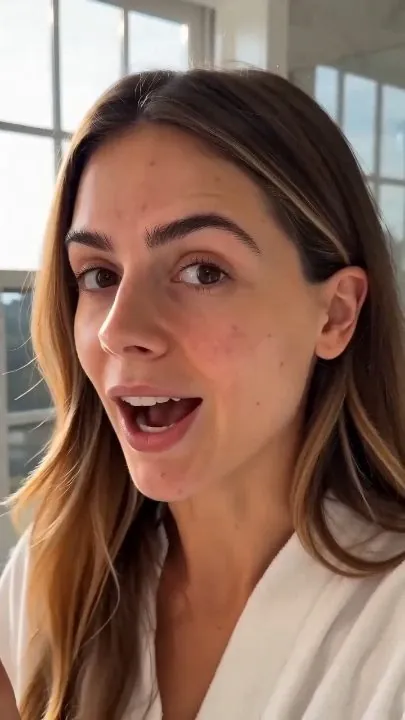
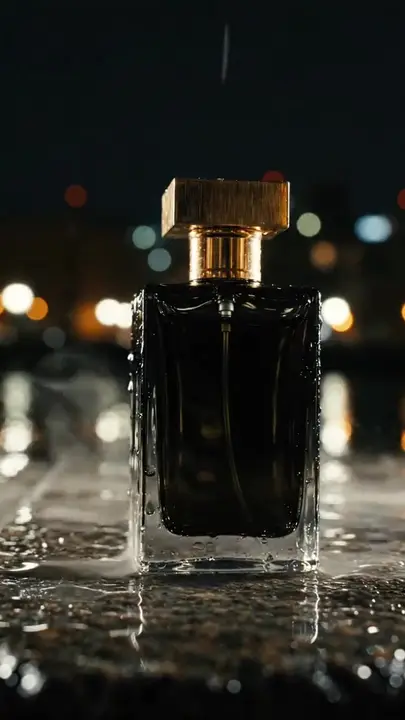
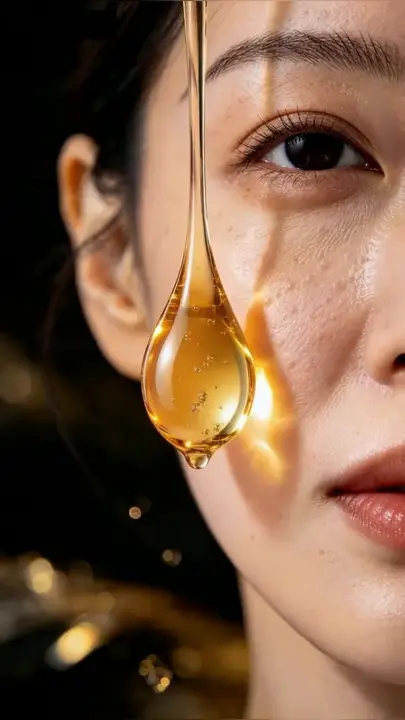

From left to right: talking-head UGC, product hero, sensory close-up, cinematic texture. All four are vertical 9:16 ads generated with Klaivo.
1. Talking-head UGC
What it looks like: one person, phone-style framing, speaking straight to camera as if recommending the product to a friend (first image above).
Why it works: a face in the first frame stops the scroll better than most objects, and a first-person line feels like a recommendation rather than an ad.
Example beat sheet (15 s, 3 clips):
- Hook: "I stopped buying three different serums. Here's why."
- Proof: the product in hand, one specific benefit, said plainly.
- CTA: "It's the one in the link. Try it for a month."
Best for: beauty, wellness, gadgets, anything where a personal opinion carries weight. More on the format in what is AI UGC.
2. Product hero
What it looks like: the product alone, beautifully lit, in a setting that tells you who it's for: a perfume bottle on a wet street at night (second image).
Why it works: it sells a mood and a price positioning in one shot. No talking needed; music and a short line on screen do the work.
Example beat sheet: a slow reveal of the bottle, a close-up of the cap or label, then the name and one line ("For the nights you don't come home early").
Best for: fragrance, jewelry, watches, premium drinks: products bought on desire rather than on specs.
3. Product demo
What it looks like: the product doing its job, in close-up: the blender crushing ice, the stain lifting, the lamp folding flat.
Why it works: it answers "does it actually work?" before the viewer asks. It's also the easiest format to keep honest: you show, you don't claim.
Example beat sheet: the problem in one shot (the stain), the product in action, the result, then the CTA.
Best for: home, kitchen, cleaning, tools, any product with a visible before and after.
4. Problem → solution
What it looks like: a relatable frustration first, then the product as the fix.
Why it works: the viewer recognizes their own problem in the hook, so they keep watching to see the answer.
Example hooks: "If your coffee goes cold before you finish it…", "Your afternoon crash isn't about sleep."
Best for: almost every category. It's the default direct-response structure (the PAS framework).
5. Sensory close-up
What it looks like: extreme close-ups of texture: a serum drop falling (third image), foam, steam, fabric moving.
Why it works: texture is something a photo can't fully deliver. In motion, it makes the viewer feel the product.
Example beat sheet: two or three macro shots, a voiceover line about the sensation ("Light, absorbs in seconds, no sticky finish"), then the product and CTA.
Best for: skincare, food and drinks, textiles. The fourth image, liquid on glass under warm light, is the same idea used for pure atmosphere.
6. Comparison
What it looks like: your product next to the usual way of doing it: the old razor vs. yours, the paper planner vs. the app, the bottle of water vs. the filter jug.
Why it works: it gives the buyer a reference point and a reason to switch in a single frame.
Rule: compare with a category or a habit, not a named competitor, unless you can back every claim.
7. Offer-led
What it looks like: the offer is the hook: "First box free", "Bundle of three, one price." The product still appears, but the deal is the message.
Why it works: for warm audiences (people who visited your store), a clear offer is often the last push.
Rule: only advertise an offer that exists and that you can honor. Fake countdowns and invented discounts are misleading under consumer law in the EU and the UK, and they erode trust fast.
8. Founder story
What it looks like: the person behind the brand, explaining in their own words why they made the product.
The classic example: Dollar Shave Club's 2012 launch video, a founder walking through a warehouse delivering deadpan one-liners. It reportedly cost about $4,500 and brought in around 12,000 orders in the first 48 hours (Wikipedia; Built In LA). The lesson that still holds: a clear point of view and a strong first line beat a big budget.
Best for: new brands with a genuine story. It's the one format AI can't fake well: if you have a founder, film them.
Where to find real, current video ad examples for free
Examples in articles age fast. To see what your competitors run right now, use the platforms' own libraries:
| Library | What you get | Limits |
|---|---|---|
| Meta Ad Library | Every active ad on Facebook and Instagram, searchable by advertiser or keyword, by country | No performance data for commercial ads |
| TikTok Top Ads (Creative Center) | High-performing TikTok ads, filterable by region, industry and objective | Only ads that advertisers authorized; not a complete view (TikTok) |
How to use them without copying: pick five ads from competitors that have been running for weeks (longevity is a decent proxy for "it works" when you don't have the numbers), and note for each one the hook, the format from the list above, and the CTA. Then make your own version with your product, your proof and your words.
Turning an example into your own ad
- Choose the format that fits your product (desire → product hero; doubt → demo; habit → comparison).
- Write the hook first. If the first line is weak, the rest won't be seen. Ready-to-use scripts are in video ad script templates.
- Keep it to three clips. Hook, proof, CTA: about 15 seconds, 8–12 words per clip.
- Get the format right for the placement: 9:16 for Reels and Stories, 4:5 or 1:1 for feeds. Sizes and safe zones are in Facebook and Instagram video ad specs.
- Make several concepts, not one. Test different formats from this list against each other, not five versions of the same ad; see how many ad creatives you need.
If you'd rather not start from a blank page: paste a product link into Klaivo's AI ad generator. It reads the page, writes a clip-by-clip script you can edit line by line, and generates each clip from your product photo. New accounts get 3 product-page analyses free, with no card.
FAQ
What is a good example of a video ad?
A good video ad stops the scroll in the first two seconds, shows the product early, keeps to one message and ends with one clear call to action. Talking-head UGC, product demos and problem-to-solution ads are the most common formats that meet those criteria for e-commerce.
How long should a video ad be?
For vertical direct-response ads on Reels, Stories and TikTok, 15 seconds in three clips of about 5 seconds is a solid default. Platforms accept much longer files, but every extra second has to earn the viewer's attention.
Where can I see my competitors' video ads?
In the Meta Ad Library for Facebook and Instagram, which lists every active ad by advertiser and country, and in TikTok's Top Ads dashboard in the Creative Center, which shows high-performing ads that advertisers have authorized.
What is a UGC video ad?
A UGC (user-generated content) video ad looks like a customer recommending the product to camera, usually filmed on a phone. Brands commission these from creators, or now generate them with AI presenters.
Can I make video ads like these with AI?
Yes. AI video generators can produce product hero, close-up, demo and UGC-style ads from a product photo and a script. A founder story is the exception: it only works if it's the real founder.